

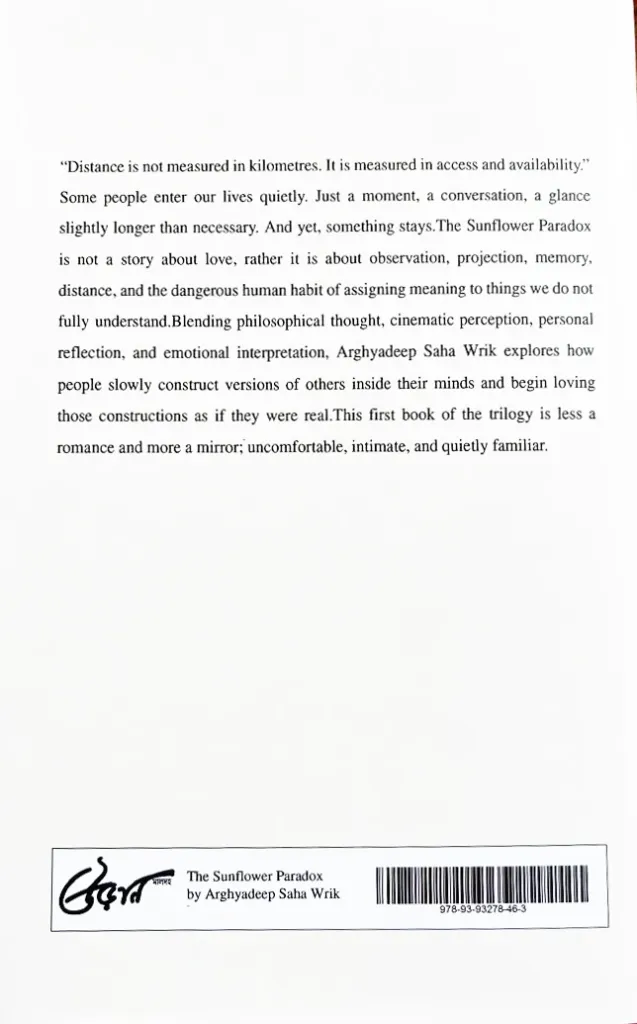












The Sunflower Paradox: Book One of the Trilogy
₹ 257.00
₹ 257.00
Terms and Conditions
DELIVERY CHARGES ARE INCLUDED IN THE PRICE. CHARGES ARE EQUAL ACROSS ALL INDIA.
No Refund
REFUND, CANCELLATION AND RETURN POLICY:
ALL SALES ARE FINAL.
Orders cannot be cancelled once payment has been successfully processed.
Refunds will not be issued for:
• Change of mind
• Accidental purchases
• Customer preference
• Incorrect product selection
• Failure to read product descriptions
• Refusal to accept delivery
• Incorrect shipping information provided by the customer
Customers are advised to carefully review all product information before completing their purchase.
In cases of transit damage, manufacturing defects, or receipt of an incorrect item, customers must notify us within 48 hours of delivery with supporting photographs. Resolution, replacement, or other remedies will be provided in accordance with applicable laws.
Shipping: 2-3 Business Days
DELIVERY CHARGES ARE INCLUDED IN THE PRICE. CHARGES ARE EQUAL ACROSS ALL INDIA.
No Refund
REFUND, CANCELLATION AND RETURN POLICY:
ALL SALES ARE FINAL.
Orders cannot be cancelled once payment has been successfully processed.
Refunds will not be issued for:
• Change of mind
• Accidental purchases
• Customer preference
• Incorrect product selection
• Failure to read product descriptions
• Refusal to accept delivery
• Incorrect shipping information provided by the customer
Customers are advised to carefully review all product information before completing their purchase.
In cases of transit damage, manufacturing defects, or receipt of an incorrect item, customers must notify us within 48 hours of delivery with supporting photographs. Resolution, replacement, or other remedies will be provided in accordance with applicable laws.
Shipping: 2-3 Business Days